Biography
Mapping life, from island landscapes to the Amazonian canopy
Gonzalo Rivas-Torres is an Ecuadorian ecologist who builds ambitious, collaborative science at the intersection of tropical field ecology, spatial technology and conservation.
He is Associate Professor at Universidad San Francisco de Quito and Director of Tiputini Biodiversity Station, with appointments at the University of North Carolina at Chapel Hill and the University of Florida. Across more than two decades of research, he has linked patient observation in the field with drones, satellite imagery, genomics, ecological networks and artificial intelligence.
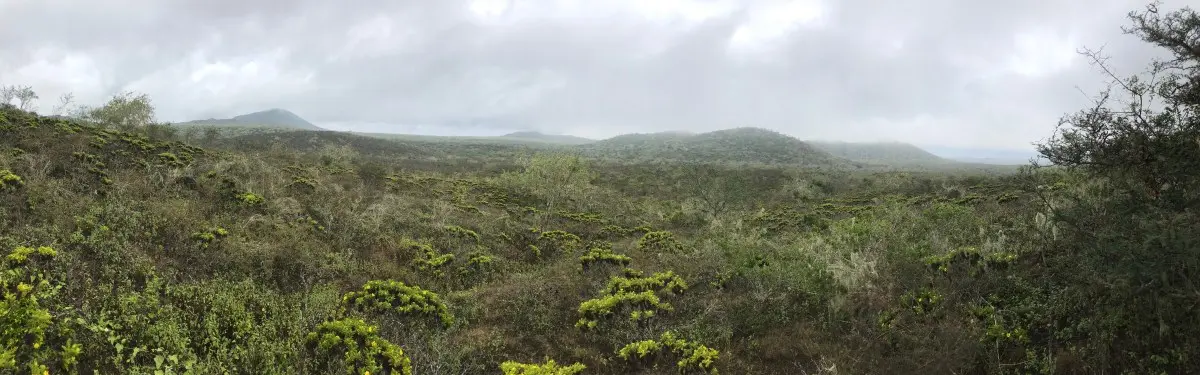
In Galápagos, his work helped create a new generation of field-validated vegetation maps, integrating nearly 200 experimental plots and transects with low-cost drone and satellite data. His research has also traced the biogeography and first complete phylogeny of Scalesia—Darwin’s giant daisies—and advanced genomic understanding of one of the archipelago’s most remarkable plant radiations.
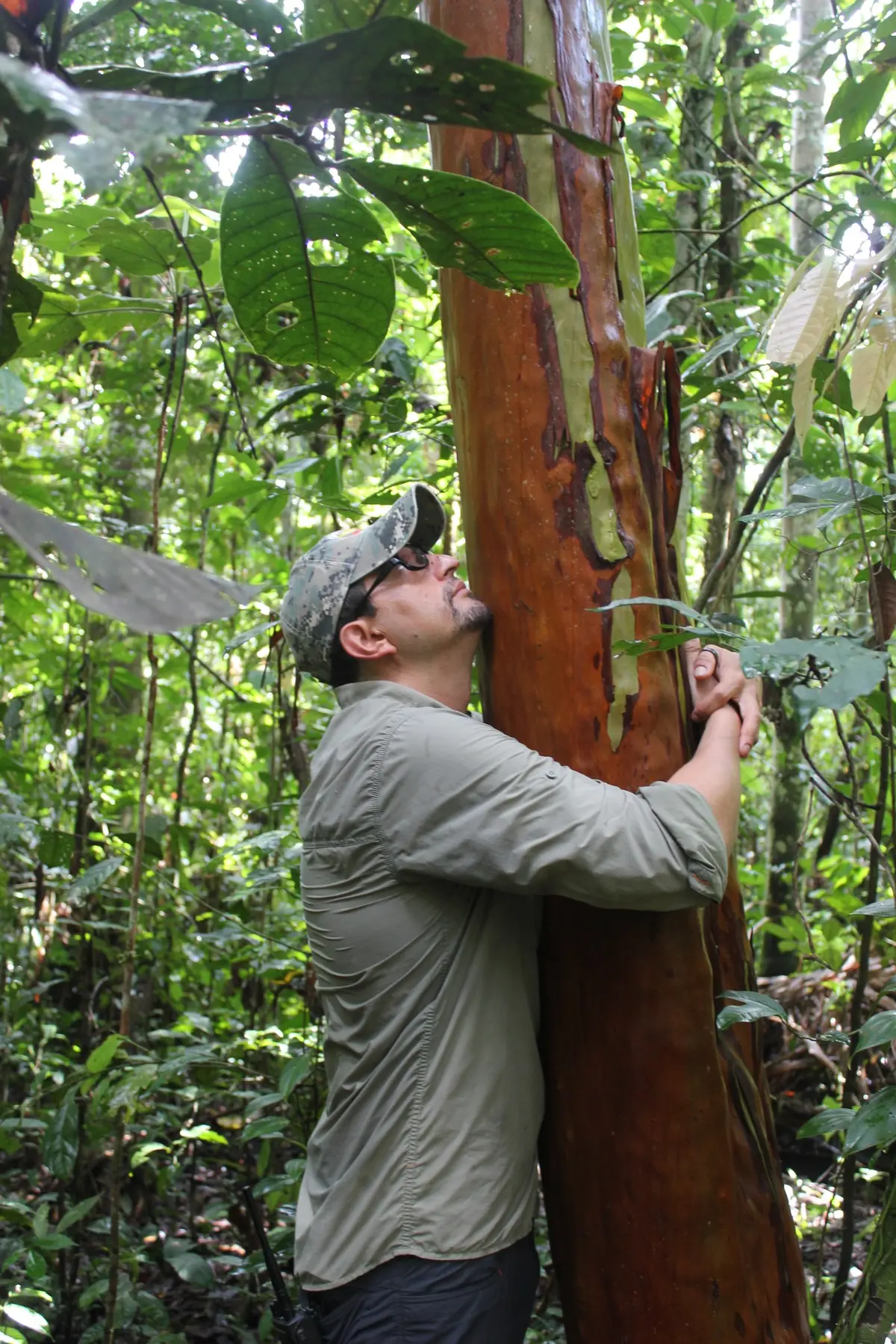
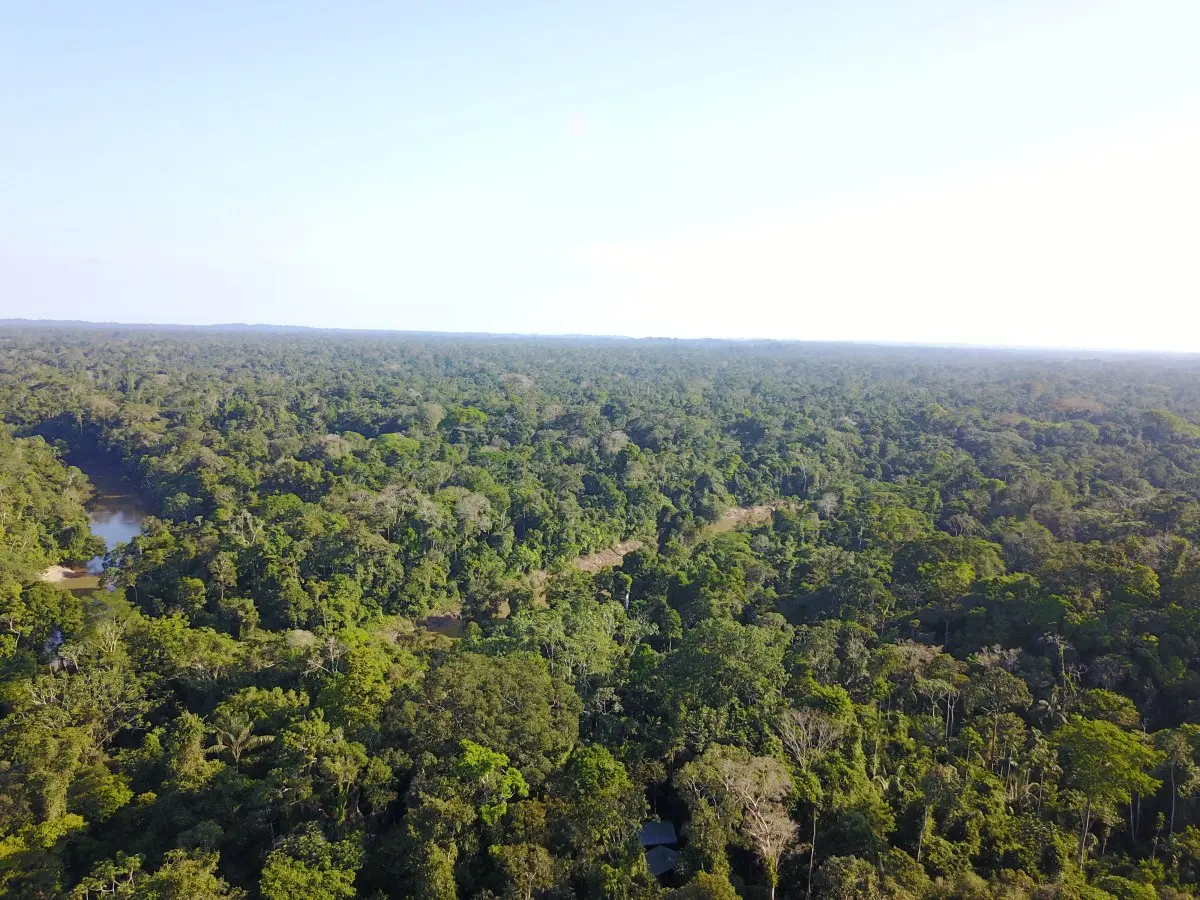
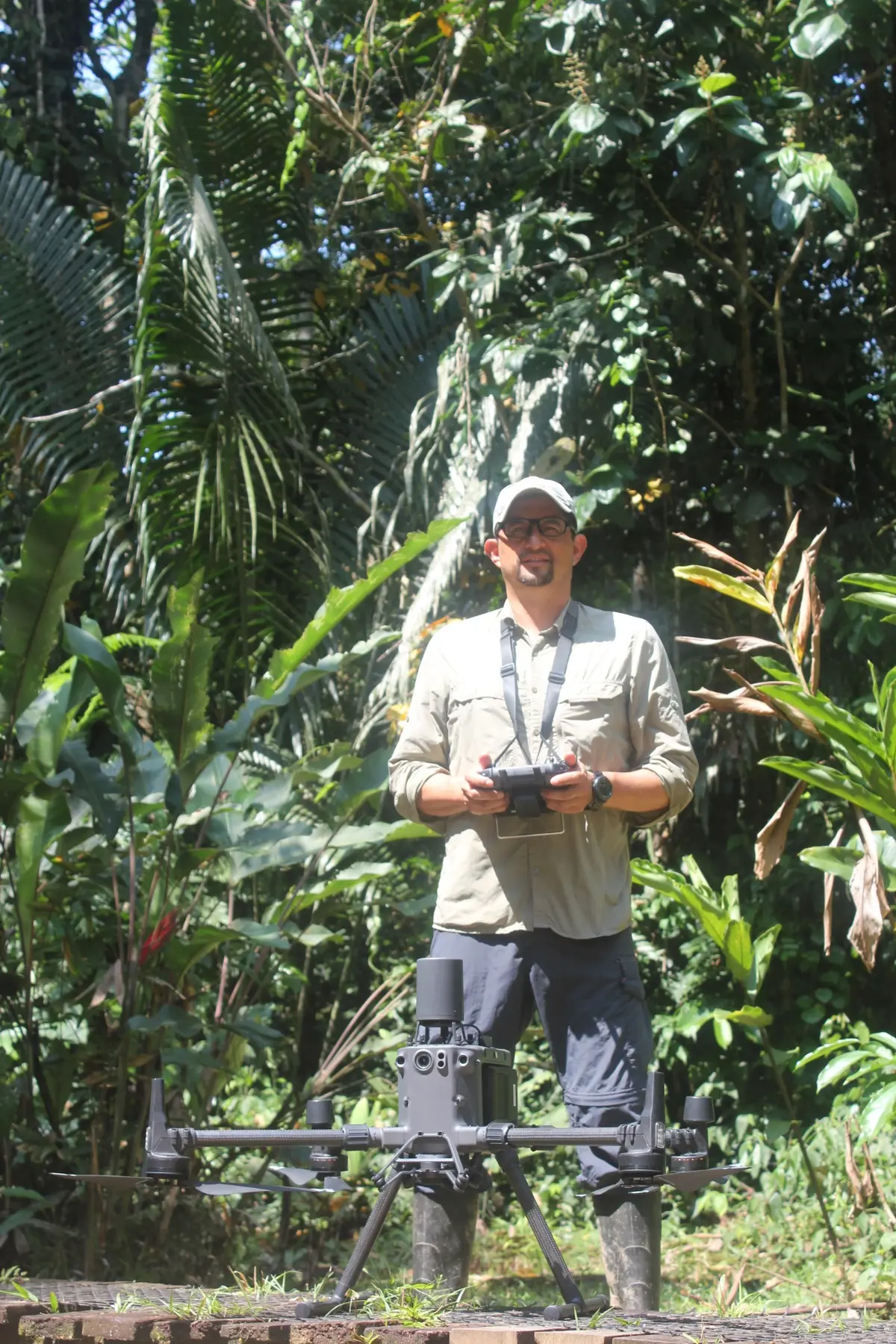
In the Ecuadorian Amazon, he leads long-term work on tree diversity, forest dynamics and canopy change while building Tiputini as a living laboratory for high-resolution environmental intelligence. This work connects local expertise and global partnerships to turn biodiversity data into decisions that can protect forests at meaningful scales.
80peer-reviewed publications across tropical ecology and conservation
20+ yearsof research across Amazonia, Galápagos and tropical ecosystems
$1.2M+in listed competitive and collaborative research funding
2 landscapesconnected by one research vision: Amazonia and Galápagos
Five publications in ScienceHyperdominance in the Amazonian Tree Flora (2013); Persistent effects of pre-Columbian plant domestication on Amazonian forest composition (2017); Global urbanization drives adaptation in the plant white clover (2022); More than 10,000 pre-Columbian earthworks are still hidden throughout Amazonia (2023); and Tropical forests in the Americas are changing too slowly to track climate change (2025).
Two publications in NatureConsistent patterns of common species across tropical tree communities (2024) and Canopy functional trait variation across Earth’s tropical forests (2025).
Additional research published in Nature Communications, Nature Ecology & Evolution, Nature Microbiology, Current Biology, PNAS, Ecology Letters and Remote Sensing of Environment.